Photographs |
Collection of Raoul Korty
Author:
Margot Werner
Margot Werner
The seizure: “securing valuable cultural objects from the Ostmark”
After the annexation, Korty was classed as a Jew in the meaning of the Nuremberg Laws. He was banned as a result from working as a journalist, and his financial situation deteriorated. His prominence in Viennese journalist circles now told against him. The seizure of his collection is one of the few cases in which there was no need for the ÖNB director at the time to make an explicit request to the authorities responsible for the confiscation and disposal of Jewish assets. The attention of Nazi director general Paul Heigl was drawn to the collection in February 1939 by the inspector of the security police.
This prompted Wilhelm Beetz, head of the ÖNB portrait collection to consult Walther Stahlecker, inspector of the security police and SS-Standartenführer, with the suggestion that “cultural objects of value to the National Library from the Ostmark be given put aside” so as to prevent them from being “smuggled abroad”. Just two weeks later the Gestapo reacted to this request.
In a major action on 26 April 1939, the majority of Korty’s collection in his apartments and the removal goods stored with a transport company were “secured”. The 30,000 photos and negatives were seized by the Gestapo and assigned to the National Library.
The collection was never sorted, either during the Nazi period or afterwards. This meant that until its restitution in 2005 it remained in its original boxes in the ÖNB depots.
back
After the annexation, Korty was classed as a Jew in the meaning of the Nuremberg Laws. He was banned as a result from working as a journalist, and his financial situation deteriorated. His prominence in Viennese journalist circles now told against him. The seizure of his collection is one of the few cases in which there was no need for the ÖNB director at the time to make an explicit request to the authorities responsible for the confiscation and disposal of Jewish assets. The attention of Nazi director general Paul Heigl was drawn to the collection in February 1939 by the inspector of the security police.
This prompted Wilhelm Beetz, head of the ÖNB portrait collection to consult Walther Stahlecker, inspector of the security police and SS-Standartenführer, with the suggestion that “cultural objects of value to the National Library from the Ostmark be given put aside” so as to prevent them from being “smuggled abroad”. Just two weeks later the Gestapo reacted to this request.
In a major action on 26 April 1939, the majority of Korty’s collection in his apartments and the removal goods stored with a transport company were “secured”. The 30,000 photos and negatives were seized by the Gestapo and assigned to the National Library.
The collection was never sorted, either during the Nazi period or afterwards. This meant that until its restitution in 2005 it remained in its original boxes in the ÖNB depots.
back
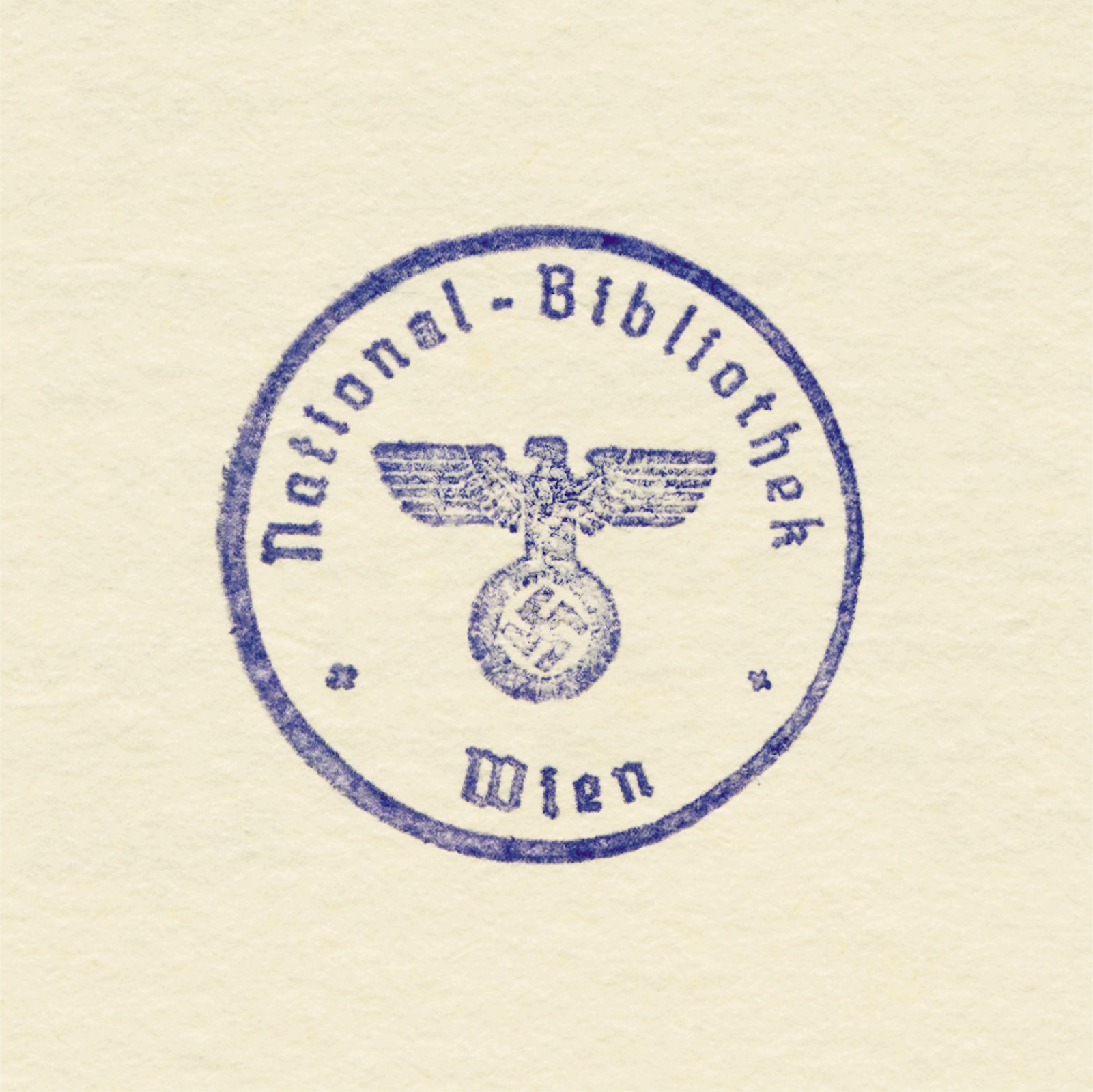
Inventory stamp of the National Library during the time of National Socialism © ÖNB